
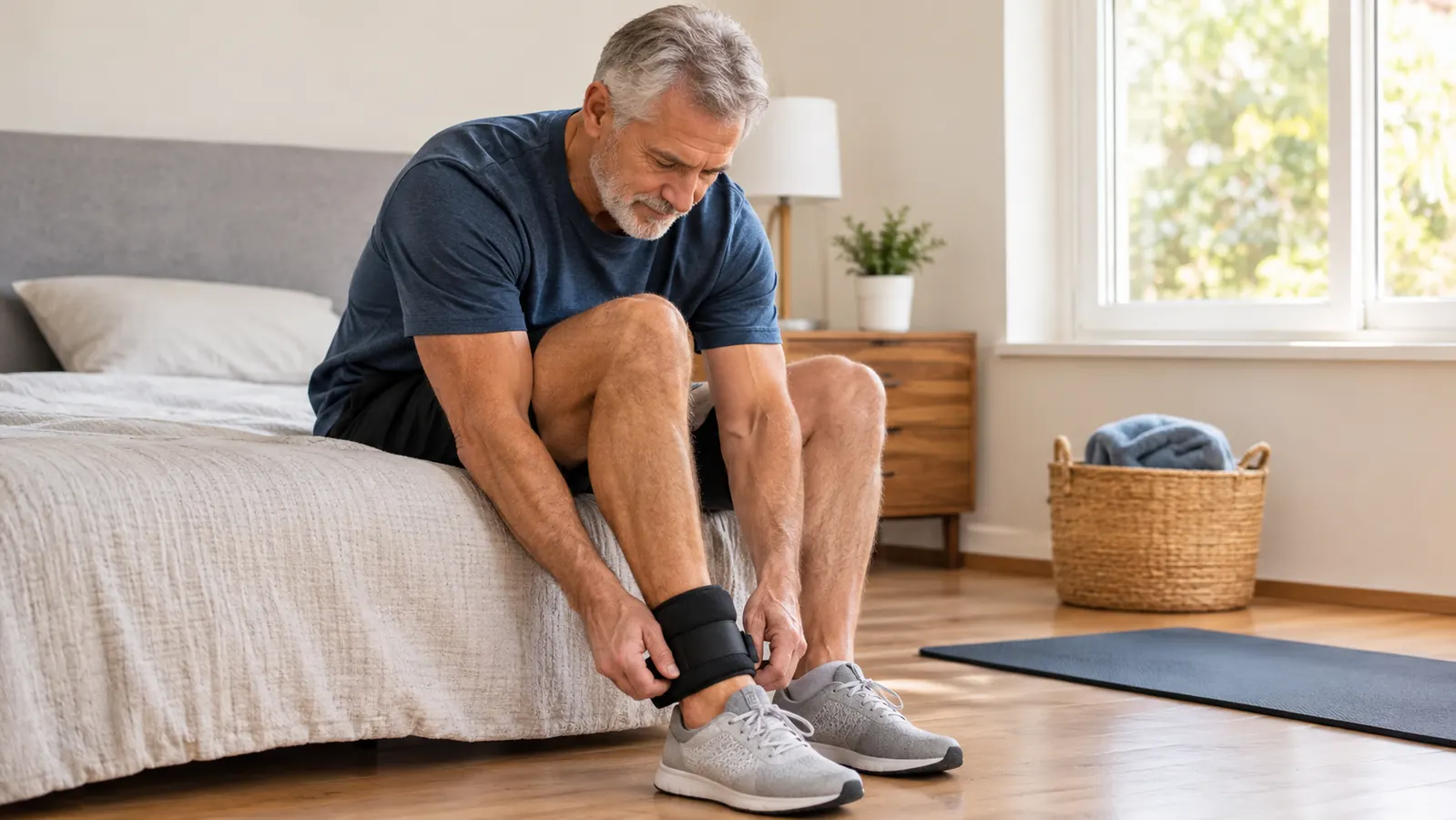
At sixty-four I lost my footing on the back porch steps with a bucket of potatoes in my hand. I did not fall. I sat down hard on the top step, got my breath back, and carried the bucket inside. Then I told Joan we needed to talk about my legs. My doctor listened to my heart, said it was fine, and told me the problem was the muscles that were supposed to keep me upright. I have been working on those muscles ever since, in the spare bedroom upstairs with the door shut and nobody watching.
The Sportneer adjustable ankle weights came into the routine about two and a half years in, once my right knee had stopped complaining about the easy work. I wanted something to push against that did not need a bench, a cable, or a drive into town. They live in a basket by the spare-bedroom door now, and I strap them on five mornings a week. Two and a half years is long enough to know what a piece of equipment actually is, as opposed to what the box says it is.
The Quick Verdict
A simple pair that lets you add a pound at a time and stop where your knee says stop. Two and a half years of five-day-a-week use and the straps still hold. Not a balance aid, and not something I would wear outdoors.
Amazon Check Today's Price →The pound-at-a-time adjustment is the whole reason these stayed in my routine
Most ankle weights come fixed. These hold five sand packets per side, so you can pull one out and drop from four pounds back to three on a morning when the knee is talking. That is the feature I use most, and it is the reason a fixed pair would not have lasted here.
Amazon Check Today's Price on Amazon →How I've Used Them
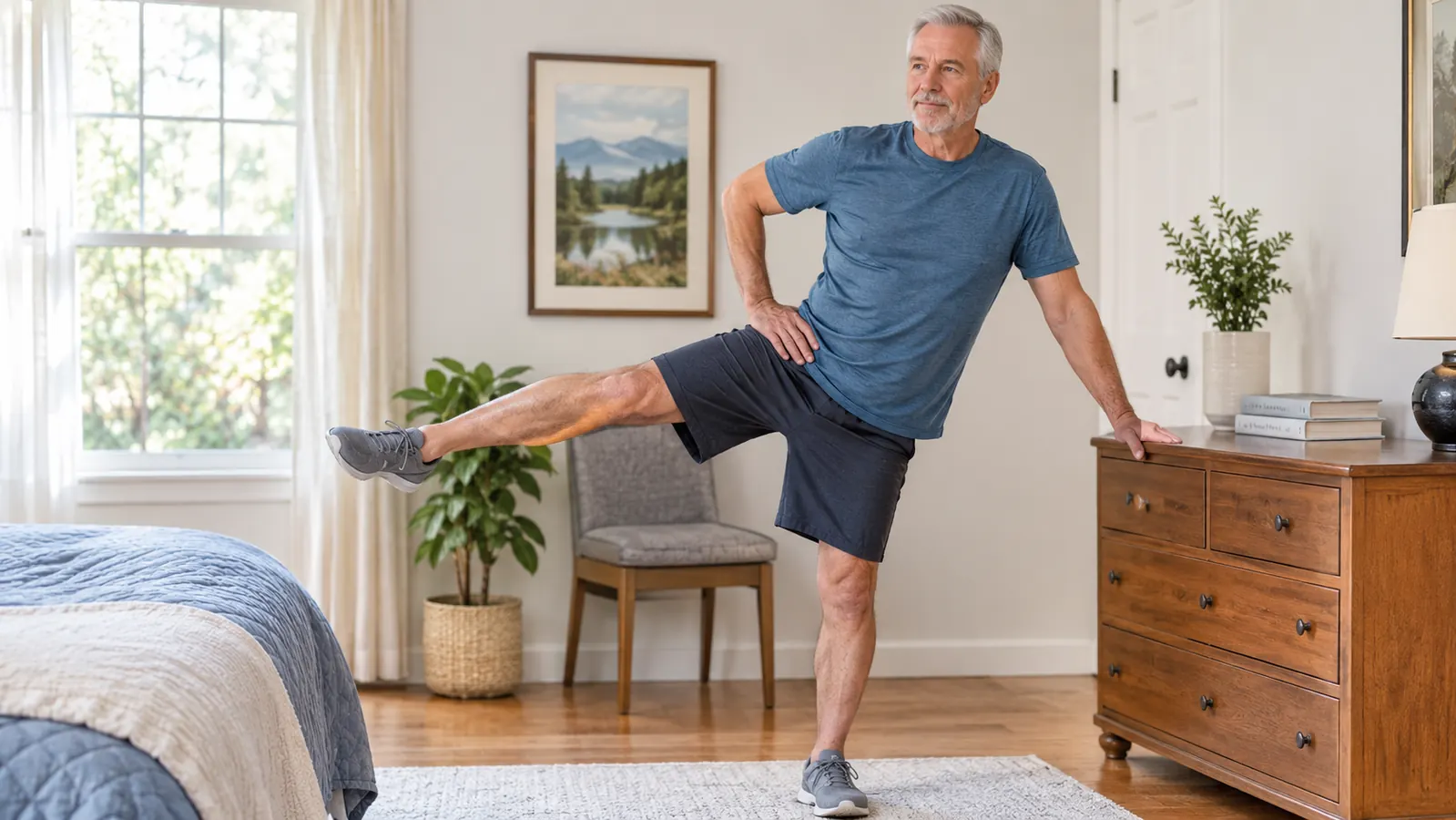
My routine runs about twenty-five to thirty minutes, five mornings a week, after coffee. The ankle weights take up the last ten of that. I sit on the edge of the bed with my back straight and do seated leg extensions, one leg at a time, twelve slow reps per side, up on a count of two and down on a count of four. Then I stand at the dresser with one hand flat on top of it and do fifteen side leg lifts per leg, toes pointed forward, no swinging the leg out past what I can control. Then I march in place, lifting the knees higher than I would naturally, twenty steps each side. That is the whole program, and it has not changed much in two years except the numbers.
I started at two pounds per ankle and stayed there for the better part of three months. The first week it felt like nothing at all, which is exactly why I stayed. The second week my knee was sore in a dull, even way that was not the bad sore, the kind that says a muscle did work rather than a joint did too much. I waited it out and it settled. I added a third pound in July of that first summer, and a fourth that fall, and I have been at four per ankle for most of the two years since. Five is available. Five is not required.
Before the weights I tried two other things, and I mention them because both are cheaper and both failed here. The first was a flat resistance band looped around both ankles for side-stepping across the bedroom floor. It worked for about a week, then it started sliding up my calf instead of staying at the ankle, and when it let go it snapped back with enough snap that I stopped trusting it near a doorway. The second was pinching a hand weight between my feet for the leg extensions. That one lasted one session. You spend the entire movement squeezing your feet together so the weight does not drop, which means your leg is not really doing the work you sat down to do. The ankle straps solved both problems by simply staying where they were put.
One thing I want to be straight about, because I have read enough product pages to know they blur it: I do not wear these walking. I do not wear them on the porch steps, in the garden, or out to the truck. Not once in two and a half years. Weight on the ankle changes how your leg swings, and I am not interested in finding out what that does to my footing on a wet board. They go on in the bedroom, and they come off in the bedroom.
What the Adjustment Actually Looks Like
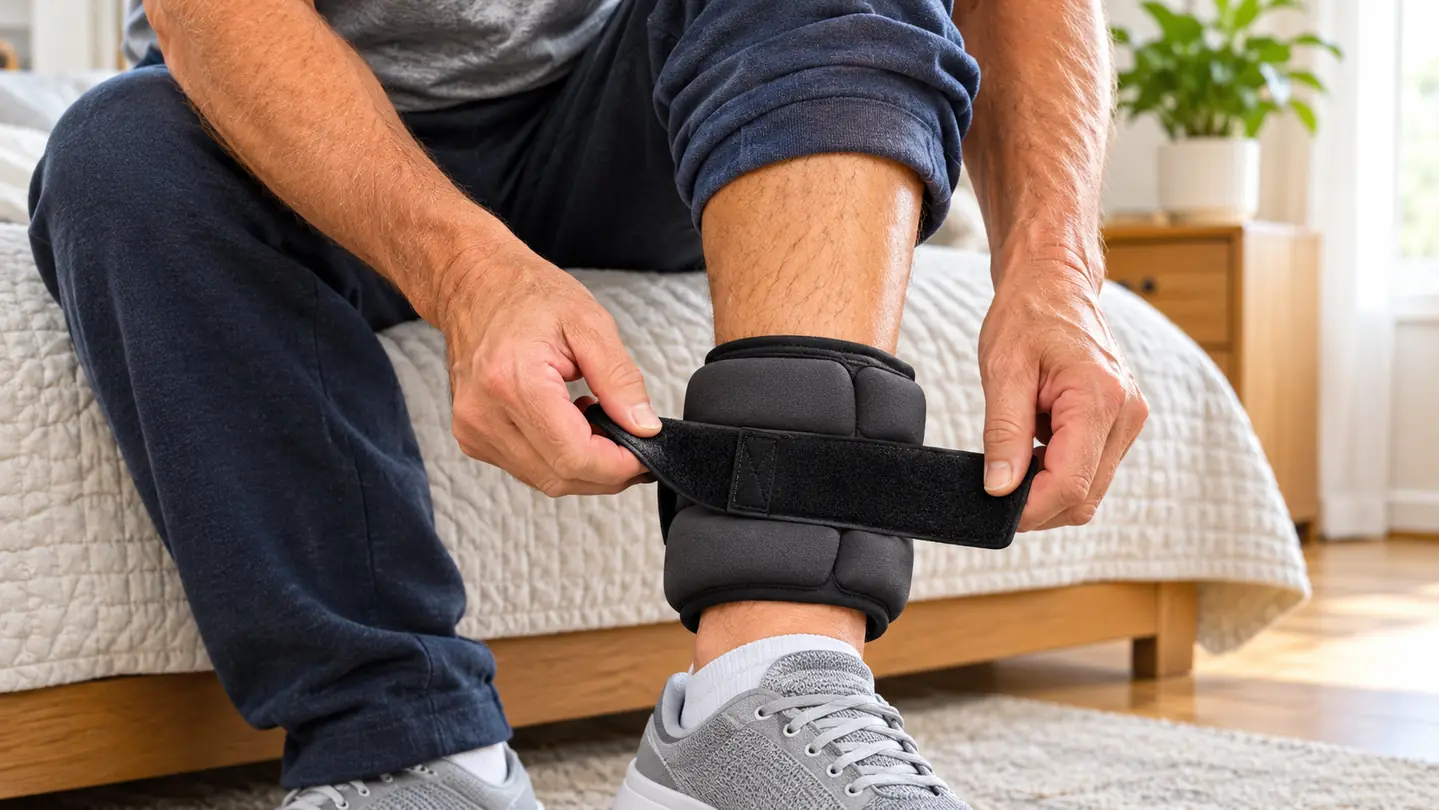
Each Sportneer weight holds five one-pound sand packets in a row, and each packet slides out of its own pocket. That means one ankle goes one, two, three, four, five pounds, and the pair goes two, four, six, eight, ten. There is a flap over the pockets and it tucks back down flat. Removal of a single packet takes about four seconds and no tools, which I know because I timed myself being curious one morning. In practice I pull one packet out of each side on a morning when the knee is stiff and put it back the next day. That flexibility is the reason these lasted in my routine when a fixed pair would have sat in the basket.
The closure is hook and loop, and the strap is generous. The fit is listed at ankle sizes from seven and a half to twelve and a half inches, and that means the circumference around the ankle, not the length of your foot. I got this wrong the first time, which is why I am telling you. I wrapped Joan's cloth tape around the narrow spot just above the ankle bone and came up with nine inches, felt smug about it, then read the listing again and measured the thick part where the strap actually sits. That came to ten and a quarter. The straps close with several inches of overlap to spare either way, and the overlap is what keeps the hook and loop from working loose mid-set.
The pair weighs about ten pounds when both are loaded all the way, which sounds heavier than it is. The mass sits close to the skin, right above the joint, so it does not pull or swing the way a dumbbell does. That is the whole argument for ankle weights over hand weights for leg work, and it holds up. The tradeoff is that ten pounds per pair is the ceiling. There is no way to make these heavier than five per side, and if you get strong enough to want more, you buy something else.
Two and a Half Years In: What Held Up
The exterior is neoprene and it has stayed soft. No cracking, no flaking, no stiff patches where it folds behind the ankle. Sportneer also lists reinforced stitching and a sturdy outer trim, and I can tell you the stitching at the strap ends has not opened on either one. The hook and loop has picked up a little lint over the years, the way all hook and loop does, and it still grabs hard enough that I have to pull with intent to get the strap off.
About once a month I wipe both of them down with a damp rag and a drop of dish soap, then leave them on the sill to air dry before they go back in the basket. That is the only maintenance I have done. The lint problem was worse in the winters, because I keep a wool blanket folded on the foot of the bed and hook and loop loves wool more than it loves anything else. Twice I picked the fuzz out of the hooks with the tip of a pocket knife, both times in about a minute, and both times the strap came back to full grip. If you never clean the hooks out, that is the one way I can see these failing early.
The sand has stayed inside. That is a lower bar than it sounds, because the packets are small and the seams on small packets are where cheap versions fail. I have dropped one on the hardwood twice, once in the hallway and once stepping out of the shower where the floor was damp. It survived both. No packet has torn, leaked, or gone missing, though I came close once when one worked loose and slid under the bed for a week. I found it with a broom handle and a flashlight and it was full of dust and nothing else.
The neoprene does hold warmth, and after twenty minutes the back of my ankle is damp on a July morning. That is not a defect, it is what neoprene does against skin. A thin sock underneath fixes it entirely, and I wear one from June through September. The rest of the year I do not think about it.
What They Won't Do
These are not a balance aid. Strapping four pounds to your ankles does not make you steadier on your feet, and there is a real argument that it makes you less steady, because it changes where the leg swings from. If balance is the problem, my own answer was a foam pad and a dresser to hold onto, not weight on the ankles. I do the balance work first, barefoot, both feet flat on the pad with one hand on the wood, and the weights come after. My doctor was specific about that order and I have kept to it: the balance work when I am fresh, the resistance work when I am warm.
They are not a walking program either. The listing names walking and running among the recommended uses, and plenty of people do it, and if that is what you want, that is your call. I will only tell you what I decided for myself: at sixty-eight, with a knee that has opinions, adding weight to a gait I am still trying to keep even seemed like the wrong trade. I asked about it at my last checkup and got a shrug and a no. Yours may say something different. Ask before you decide, and if you have a physical therapist, ask that person twice.
And they will not make the work interesting. Ten minutes of leg extensions is ten minutes of leg extensions, whether there is a pound on your ankle or not. What the weights do is make those ten minutes count for something, and let you measure the progress in packets instead of in feelings. That is a smaller promise than most product pages make. It is also the only one I can honestly make after two and a half years.
What I Liked
- One-pound sand packets let you move from two to three pounds per ankle without buying a second set
- Fits ankles from seven and a half to twelve and a half inches, with strap overlap to spare
- Hook and loop still grabs after two and a half years of five-day-a-week use
- Neoprene exterior has not cracked, and the stitching at the strap ends has held
- Sand packets stayed sealed through two drops on hardwood
Where It Falls Short
- Ten pounds per pair is the ceiling. There is no way past five per side
- Neoprene holds heat, so the ankle is damp after twenty minutes in summer
- Hook and loop collects lint and needs picking out a couple of times a year
- No guidance in the package on how much weight to start with for a stiff knee
- Not a balance aid, and not something I would wear outdoors
Two and a half years, five mornings a week, and the strap still has to be pulled with intent to come off.
Who This Is For
This is for someone who wants to add resistance to leg work at home, in a small increment, without a machine. It suits seated leg extensions, standing leg lifts, and marching in place. It suits a person coming back from a long stretch of inactivity who needs to be able to back off a pound on a bad morning rather than skip the session altogether. It suits anyone whose ankle measures inside that seven and a half to twelve and a half inch range and who wants one pair that will still fit in two years.
It also suits a household where two people might share one pair. Joan has used them a handful of times at two pounds when her hip was bothering her, and the adjustment meant she did not need her own set. They come off and go back on in a few seconds, which matters more than it sounds like it should when you are the second person in line for them.
Who Should Skip It
Skip these if you want to train heavy. The ceiling is five pounds per side, and if you are doing leg extensions with a stack of plates, this is not that and never will be. Skip them if you want a balance tool, because they are not one, and using them as one is how people get hurt. Skip them if your ankle measures outside the stated range. A strap that barely closes is a strap that will let go at the wrong moment, and the wrong moment is always the one where you are already off balance.
And skip them if you will not measure. Fit is the most common complaint on any ankle weight, and guessing is the most common cause. A cloth tape measure around the thickest part of the ankle takes ten seconds and settles the question before you spend anything. I have watched a neighbor order a pair, wait a week, and send them back because he measured his calf instead of his ankle. He would have kept them if he had spent the ten seconds.
A pair you can back off a pound on a bad morning beats a heavier pair you avoid
If your ankle measures between seven and a half and twelve and a half inches and you want leg work you can do sitting on the edge of a bed, this pair has held up through two and a half years of my mornings, five days a week.
Amazon Check Today's Price on Amazon →